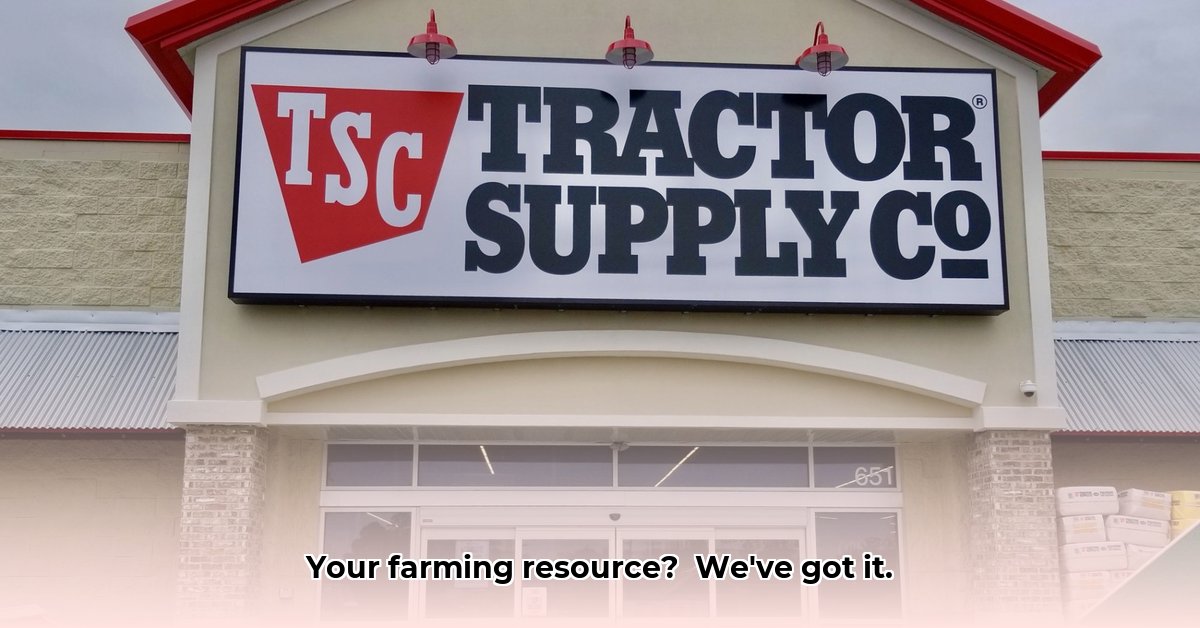
Amite, Louisiana, boasts a rich agricultural heritage, and Tractor Supply plays a significant role in supporting its farming community. This guide explores Tractor Supply Amite's offerings, its impact on sustainable agriculture, and how local farmers and gardeners can maximize its benefits while promoting environmentally responsible practices. We'll delve into the store's strengths and limitations, offering practical advice and actionable steps for building a more prosperous and sustainable future for Amite's agricultural sector. For more information on Tractor Supply locations, check out this helpful resource.
Your One-Stop Shop for Country Living
Tractor Supply Amite offers a vast range of products for farmers, ranchers, and gardeners. From animal feed and fencing supplies to tools, clothing, and pet supplies, it serves as a one-stop shop for almost all rural living needs. But does this convenience come at an environmental cost? This is a question we'll explore further. The sheer variety available, however, is undeniable, making it a convenient hub for Amite's agricultural community. Have you ever spent hours exploring their aisles? The experience itself fosters a sense of community for many local residents.
Going Green: How Sustainable is Tractor Supply?
Tractor Supply stocks items that support sustainable farming, including efficient watering systems, composting tools, and organic seeds. However, the store's overall sustainability needs further examination. Where do their products originate? What is the sustainability of their packaging and transportation methods? These are complex questions requiring further investigation and transparency from the company. "The environmental impact isn't just about the store itself," points out Dr. Emily Carter, Professor of Environmental Science at Louisiana State University, "but the entire supply chain, from production to disposal."
Behind the Scenes: Examining the Supply Chain
Assessing the true environmental footprint of Tractor Supply requires comprehensive analysis of its entire supply chain. This involves evaluating the manufacturing processes, transportation methods, packaging materials, and waste disposal practices. Each stage contributes to the overall environmental impact, and a lack of readily available data currently limits a complete assessment. This lack of transparency underscores the critical need for increased information disclosure from the company. Do you know the origin of your farm supplies? This is becoming an increasingly crucial question for conscientious consumers.
What You Can Do to Make a Difference
While waiting for greater transparency from Tractor Supply, consumers can actively promote sustainable practices. Here are three actionable steps:
Engage in Direct Dialogue: Ask Tractor Supply Amite about their sourcing practices and commitment to sustainable products and packaging. Direct consumer engagement can drive positive change.
Prioritize Local Sourcing: Whenever feasible, opt for locally sourced products. This reduces transportation emissions and supports local businesses, strengthening the Amite economy. What percentage of your supplies is currently sourced locally? This is a key metric to track for progress.
Advocate for Change: Encourage Tractor Supply to expand its offering of eco-friendly items. Increased consumer demand for sustainable products will incentivize greater supply.
Weighing the Pros and Cons: A Balanced Perspective
Tractor Supply's role in Amite presents both advantages and disadvantages:
Pros:
- Exceptional Convenience: One-stop shopping for diverse farming and gardening needs.
- Extensive Product Range: Caters to a wide variety of agricultural requirements.
- Local Job Creation: Provides employment opportunities within the Amite community.
- Potential for Sustainability: Offers some eco-friendly products with room for expansion.
Cons:
- Supply Chain Opacity: Lack of complete transparency regarding the environmental impact of its supply chain.
- Packaging Concerns: The amount and type of packaging used could be improved.
- Transportation Emissions: The carbon footprint associated with product transportation requires analysis.
- Limited Organic/Sustainable Product Selection: Currently offers limited options compared to the potential demand for eco-friendly products.
How to Source Sustainable Farming Supplies Near Amite, LA
Key Takeaways:
- Amite offers a growing market for sustainable agriculture.
- Tractor Supply serves as a starting point, but local sourcing is vital.
- Understanding specific farming practices shapes sustainable supply choices.
- Collaboration and community engagement are crucial for long-term success.
Tractor Supply: Your Starting Point, Not Your Only Solution
While Tractor Supply provides a foundation for sourcing farming supplies, a deeper dive is necessary for truly sustainable practices. Consider it the first step in a broader strategy involving local initiatives.
Beyond the Big Box: Exploring Local Alternatives
Farmers' markets, cooperative networks, and local organic farms offer opportunities to connect directly with producers and build a more resilient local economy. "Building these relationships is crucial for long-term sustainability," explains John Miller, a third-generation farmer from Amite.
Personalizing Your Approach: Tailoring to Your Needs
Consider your specific farming practices (livestock, crops) and the unique soil conditions of your farm. This influences your choices of seeds, fertilizers, and other essentials. What specific steps are you taking to personalize your sustainable farming practices?
Sustainable Practices: A Holistic Approach
Sustainable farming encompasses more than just eco-friendly supplies. Water conservation, composting, and crop rotation are vital to minimize environmental impact. "Every choice we make on the farm impacts the environment," notes Sarah Dubois, owner of Dubois Organic Farm in Amite. "We need to consider the larger picture."
Building Local Partnerships: A Collaborative Effort
Collaborating with other local farmers through cooperatives facilitates resource sharing and strengthens the community. What local collaborative initiatives are you a part of?
Leveraging Local Government Resources
Explore local governmental agencies for grants or programs supporting sustainable agriculture. These resources provide valuable assistance to farmers.
Navigating Challenges, Embracing Opportunities
Despite challenges like limited online information about sustainable suppliers, the Amite area's agricultural community can thrive by fostering stronger connections and promoting collaborative initiatives. The effort required to reach a higher level of sustainability is undeniably worthwhile.